Across Asia and Africa, rapid growth in affordable sensing technologies, mobile computing, and digital public infrastructure has created unprecedented opportunities for deploying machine learning in healthcare, agriculture, environmental monitoring, education, logistics, and public services — but these deployments expose limitations in many existing learning paradigms.
Federated optimization algorithms often assume reliable, synchronous communication despite highly intermittent connectivity. Deep learning models trained on curated Global‑North datasets frequently generalize poorly to geographically and demographically diverse populations. State‑of‑the‑art architectures are commonly evaluated without regard for realistic computational, memory, latency, or energy constraints. SustainableML‑Afrasia treats these constraints as drivers of new learning algorithms, optimization methods, model architectures, and evaluation protocols — not engineering afterthoughts.
Hosting ACML 2026 in Melbourne gives us the chance to build sustained collaboration across a third community too: Australia has strengths in ML, computer vision, optimization, and environmental and agricultural AI, while remote and regional communities face the same intermittent‑connectivity and resource‑constrained edge challenges — bushfire prediction, precision agriculture, biodiversity monitoring, disaster response — that motivate this workshop.
A venue built around the technical questions that matter to this research community.
Reviewers are looking for genuine methodological contributions — new optimization methods, architectures, and evaluation protocols — with deployment context as motivation, not the whole story.
Asia‑, Africa‑, and Australia‑based ML researchers rarely share a program despite facing closely related technical constraints.
An academia–industry panel and invited talks connect algorithmic research directly with practitioners translating it into production systems.
Short papers and extended abstracts are welcome, don't conflict with the ACML main track or other venues, and are hosted on the workshop website.
Topics include, but are not limited to:
Pruning, quantization, distillation, neural architecture search, efficient architecture design, hardware‑aware learning, coreset selection, few‑shot and low‑label learning.
Learning over heterogeneous clients under communication and systems constraints, split computing, communication‑efficient federated optimization, continual learning under concept drift.
Domain adaptation and generalization for regional data shift; fairness and robustness evaluation under non‑IID and low‑resource conditions.
Multilingual and low‑literacy NLP, participatory and community‑in‑the‑loop data collection, learning from noisy, weakly labeled, or incomplete data.
Carbon/energy‑aware training and inference, and optimization for sustainable machine learning.
Privacy‑preserving analytics, cross‑border data governance, secure and maintainable model updates.
Prediction under data scarcity, precision agriculture, low‑resource healthcare AI, disaster forecasting, environmental monitoring, and other applications motivating new ML methodology.
Parameter‑efficient fine‑tuning, self‑supervised learning, multimodal learning, retrieval‑augmented learning, adaptation under limited supervision.
We invite original technical contributions on data‑efficient training, federated and continual learning under heterogeneous connectivity, model compression for microcontroller‑class hardware, and robust learning under regional distribution shift — with a particular focus on deployment contexts across Asia and Africa. We especially welcome contributions from Asia‑based labs working on efficient and federated learning, from African researchers and practitioners working on deployment‑grounded case studies, and from the local Melbourne and Australian ML community.
| Category | Notes |
|---|---|
| 📝 Short papers | Double‑blind, ≥2 reviews |
| 📄 Extended abstracts | Double‑blind, ≥2 reviews |
Both categories are reviewed double‑blind by a Program Committee spanning Asia, Africa, and Australia, evaluated on relevance, originality, technical soundness, clarity, and potential impact. Accepted submissions are presented as oral talks or posters, hosted on the workshop website, and do not conflict with the ACML 2026 main conference track or other venue submissions.
Submissions are made via OpenReview, formatted using the official ACML 2026 camera‑ready template.
Submissions must not exceed 16 pages in total, including references and appendices, and must follow the official ACML 2026 camera‑ready template (LaTeX and Word styles included in the download).
All submissions must be fully anonymized for double‑blind review — no author names, affiliations, or identifying acknowledgments in the submitted PDF. Author identities are revealed to reviewers only after decisions are finalized.
Non‑archival: accepted work may also be submitted, or have already been submitted, elsewhere, including the ACML 2026 main conference track. We only ask that you note this in your submission's comments field.
Optional appendices, code, and datasets may be linked or attached. Reviewers are not obligated to consult supplementary material, so the core contribution should be clear from the main text alone.
At least one author of each accepted submission is expected to attend the workshop in person to present. Accepted papers are presented as a contributed oral talk or a poster, assigned based on programme fit and available slots.
Submissions must be written in English. We welcome case studies and deployment reports as well as purely theoretical or algorithmic contributions, provided the technical contribution is clearly articulated.
Notification and camera‑ready dates are tentative pending confirmation against the official ACML 2026 workshop‑track calendar.
A half‑day, in‑person program built around all five invited talks — three from academia, two from industry — alongside a poster session, contributed orals, and an academia–industry panel. The exact day (within 1–4 December 2026) will be confirmed once ACML 2026 publishes its workshop‑track schedule.
| Time | Activity |
|---|---|
| 09:00–09:10 | 👋 Opening remarks & framing talk |
| 09:10–09:35 | 🎤 Invited Talk 1 — Prof. Teruaki Yokoyama (Kobe Institute of Computing / NICT, 🇯🇵 Japan) |
| 09:35–10:00 | 🎤 Invited Talk 2 — Prof. Yong‑Sheng Chen (National Yang Ming Chiao Tung University, 🇹🇼 Taiwan) |
| 10:00–10:25 | 🎤 Invited Talk 3 — Prof. Ramadhani S. Sinde (University of Dar es Salaam, 🇹🇿 Tanzania) |
| 10:25–10:50 | ☕ Coffee break / poster session |
| 10:50–11:15 | 🎤 Invited Talk 4 — Ishan Datta (Orgvue, 🇦🇺 Australia) |
| 11:15–11:40 | 🎤 Invited Talk 5 — Kashish Chawla (Accenture Japan, 🇯🇵 Japan) |
| 11:40–12:00 | 💡 Contributed oral presentations |
| 12:00–12:20 | 🏭 Panel — academia–industry perspectives |
| 12:20–12:30 | 🏆 Closing remarks |
SustainableML‑Afrasia is held as a half‑day workshop track within ACML 2026, the 18th Asian Conference on Machine Learning, hosted in Melbourne, Australia. Full workshop‑day logistics, room assignments, and the local venue address will follow the ACML 2026 conference schedule and be published closer to the event.
The timing places ACML — and this workshop — in the same week as NeurIPS 2026 in Sydney, making a short domestic connection possible for attendees continuing on to the wider December conference circuit in the region.
A slate built to span all three communities this workshop bridges — Asia, Africa, and the local Australian host community — balancing academic algorithmic depth with industry deployment perspective.
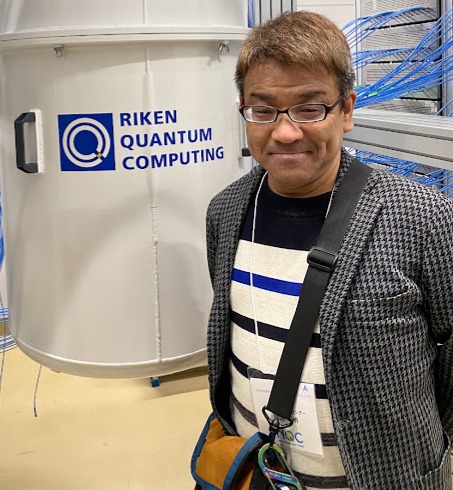
AI, cybersecurity, trustworthy computing, and distributed systems; leads national AI talent‑development initiatives including SecHack365.
🇯🇵 Japan

AI, computer vision, medical image analysis, and multimedia computing; robust and data‑efficient learning for real‑world applications.
🇹🇼 Taiwan
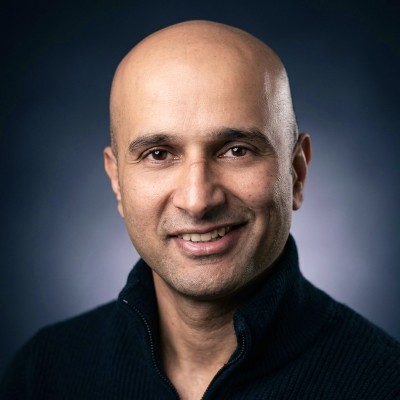
15+ years in enterprise technology and strategic partnerships across Asia‑Pacific; bridges research innovation with large‑scale industrial deployment.
🇦🇺 Australia

Intelligent decision support, knowledge discovery, and AI for sustainable development; capacity building across academia, government, and international bodies.
🇹🇿 Tanzania12+ years in enterprise AI, intelligent automation, and large‑scale solution architecture; translating ML into production environments.

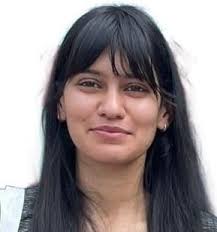
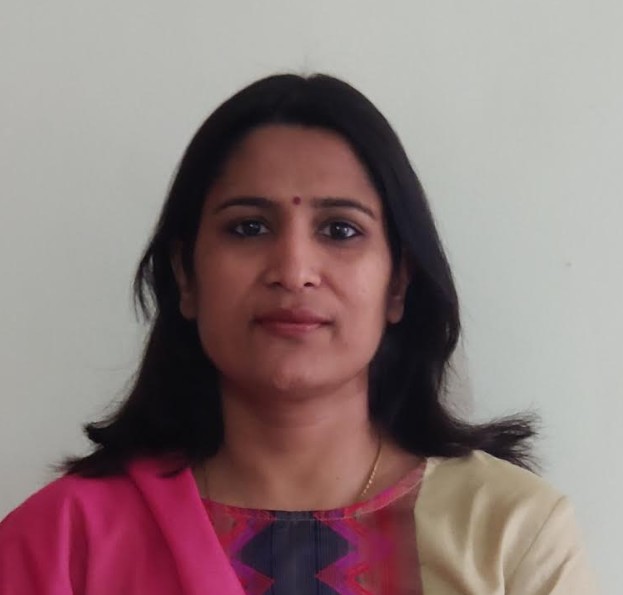
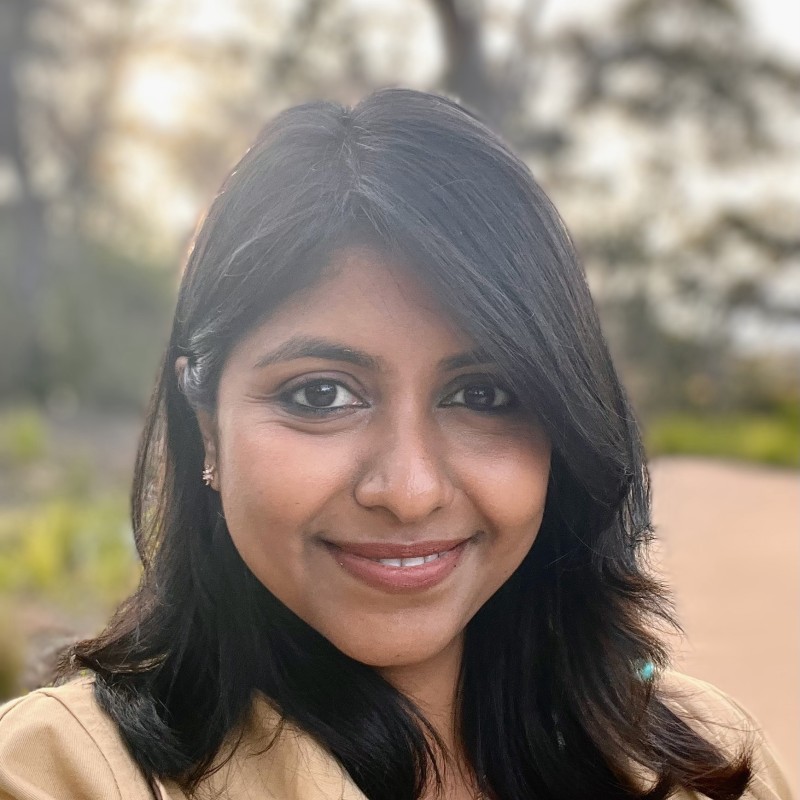
🇯🇵 JapanA five‑person committee spanning India, Tanzania, and the ACML host country, Australia — combining academic, industry, and product‑management backgrounds.

AI‑enabled information systems, digital governance, and intelligent decision support.
🇮🇳 India
Computer vision, deep learning, efficient and self‑supervised ML. Dual PhD (NYCU Taiwan & IIT Kanpur); former Research Scientist, Rakuten Group.
🇹🇿 Tanzania
AI‑enabled decision support and enterprise AI adoption; nearly a decade of industry experience at IBM, TCS, and NIIT Technologies.
🇮🇳 India
14+ years building AI‑enabled products; ML product strategy, generative AI, and academia–industry collaboration.
🇦🇺 Australia
Computer vision, deep learning, healthcare AI, and efficient machine learning.
🇮🇳 IndiaOpen to all registered ACML 2026 participants; the contributed‑paper track involves a competitive submission process. We especially encourage local Melbourne and Australian graduate students and industry researchers to attend.
An anti‑harassment and code of conduct policy will be published before the submission deadline. We're actively recruiting Program Committee members from under‑represented institutions across Southeast Asia and Africa, and offering asynchronous access to recordings for accepted authors unable to attend in person.
The workshop website and OpenReview link are being finalized. Reach out to the organizers directly to be notified when submissions open, or to discuss Program Committee involvement.