IEEE Annual Congress on Artificial Intelligence of Things (IEEE AIoT) 2026 — Kobe, Japan Submit on EasyChair →
📄 Now accepting submissions — deadline 30 September 2026 (AoE) Submit on EasyChair →
2🌍 Continents united in one technical program
7d⚡ From submission deadline to notification
2+🔍 Double‑blind reviews per submission

Overview

IoT sensor deployment is growing faster across Africa and South/Southeast Asia than in any other region, driven by low‑cost hardware and mobile connectivity — yet the machine learning methods used to interpret this data are still largely designed and validated under grid‑connected, high‑bandwidth assumptions.

The consequences are direct: precision‑agriculture systems that assume continuous connectivity fail during the drought or flood events they are meant to help manage; health‑monitoring models trained on curated Global‑North cohorts underperform on the populations that most need low‑cost diagnostics; and cloud‑dependent inference pipelines are unusable in off‑grid or intermittently‑powered settings. Researchers addressing these problems across the two continents are also frequently siloed by region, despite facing near‑identical technical constraints in power, connectivity, and hardware heterogeneity.

This workshop treats African and Asian communities not only as deployment sites, but as sources of technical innovation, locally grounded knowledge, and new system‑design principles — from disruption‑tolerant field networks to frugal‑hardware engineering practice — that can inform AIoT research globally. We adopt a broad, engineering‑grounded notion of sustainability: beyond energy and carbon efficiency, this includes affordability, operational resilience, repairability, secure maintainability, and the local capacity to operate and improve AIoT systems over the long term.

🔆 The gap this workshop targets A sensor that runs out of charge during a drought, or a model that only works with a stable connection, isn't a benchmark problem — it's a deployment failure. We want work that treats power, bandwidth, and maintainability as first‑class design constraints, not afterthoughts.

Why Submit Here

A venue built around what researchers working in this space actually need.

🛰️

Real deployment context

Reviewers understand field constraints — intermittent power, patchy connectivity, ageing hardware — not just benchmark leaderboards.

🌉

Two communities, one room

Africa‑ and Asia‑based AIoT researchers currently publish in largely separate local venues despite near‑identical technical constraints. This is the shared table.

🧭

Built‑in mentorship

Structured 1‑mentor‑to‑4–6‑mentee roundtables connect early‑career authors with senior researchers, with an optional post‑conference follow‑up.

🎯

Low‑risk submission

Archival proceedings — accepted papers are published as part of the IEEE AIoT 2026 workshop record.

Topics of Interest

Topics include, but are not limited to:

⚙️ Efficient & edge ML

Compression, pruning, quantization, distillation, NAS for microcontrollers, TinyML, coreset selection, data‑efficient training.

🔋 Sustainable & energy‑aware learning

Carbon/energy‑aware training and inference, solar/battery‑constrained scheduling, hardware–software co‑design for low‑power sensing.

🕸️ Distributed & on‑device learning

Federated learning over heterogeneous, intermittently‑connected devices; split computing; continual learning under drift.

📡 Resilient networking, security & lifecycle management

Disruption‑tolerant and intermittent networking, LPWAN and mesh networks, satellite/opportunistic connectivity, secure provisioning, firmware/model updates, long‑term maintenance.

👁️ Sensing & perception for AIoT

Low‑cost sensor fusion, robust perception under noisy hardware, remote‑sensing/satellite‑edge co‑design.

🌾 Domain applications

Precision agriculture, inclusive livelihoods, accessible learning ecosystems, water and energy management, climate/disaster early warning, low‑resource healthcare, smart mobility.

🗣️ Human‑centered & multilingual interfaces

Low‑literacy interaction design, participatory data collection, community‑in‑the‑loop deployment.

🔐 Data governance

Cross‑border data sovereignty, privacy‑preserving analytics, fairness and robustness under regional distribution shift.

Submission Guidelines

Double‑blind review via EasyChair (no cost for workshop organizers) by a Program Committee spanning Africa, Asia, and collaborating regions; each submission receives at least two reviews. We welcome research papers, deployment/experience reports, demo proposals, position/vision papers, and student posters — all under the same format and length below.

📐 Format requirements
  • IEEE Computer Society Proceedings Format — double‑column, 10pt font, US letter paper
  • PDF format only
  • No longer than 6 pages, including references
⚠️ Submission portal update All submissions must now go through EasyChair. If you submitted earlier via another portal, please resubmit via EasyChair so we can manage reviews smoothly.

Accepted submissions are archival and will be published in the workshop proceedings. Accepted demo materials may be contributed to a post‑workshop open dataset/benchmark repository.

🧭 Mentorship Track

Authors of accepted student submissions, and other interested early‑career participants, may opt into structured mentor–mentee roundtables (1 mentor : 4–6 mentees), with an optional post‑conference virtual follow‑up session.

🏆 Awards
🏆 Best Workshop Paper 🥈 Best Demo / Deployment 🎓 Best Student Paper 🌍 People's Choice Poster 🤝 Outstanding Mentor Recognition

How to Submit — Step by Step

Submissions are handled through EasyChair. Follow the steps below to submit your paper.

1

🔗 Go to the submission link

Open easychair.org/my/conference?conf=ieeeaiot2026.

2

🔑 Log in or sign up

Use an existing EasyChair account, or create a new one — it's free and quick.

3

✍️ Click "Author"

Found near the top of the conference page — this starts a new submission.

4

🎯 Choose your track

Select "Sustainable AIoT for AfroAsian Communities: Edge Intelligence for Resource‑Constrained, Climate‑Vulnerable Regions."

5

🧑‍🤝‍🧑 Fill in author details

Enter name(s), affiliation(s), and email(s), plus your paper title and abstract. Double‑check spelling and emails.

6

📎 Upload your paper

Prepare your manuscript in the IEEE Computer Society Proceedings Format (double‑column, 10pt font, US letter paper), no longer than 6 pages, and upload it as a PDF.

7

✅ Submit

Click "Submit" and save your confirmation email. You can edit your submission any time before the deadline.

⏰ Deadline: 30 September 2026 (AoE) · Workshop: 15–16 December 2026 (tentative), Kobe, Japan 🇯🇵

Author Templates

Please prepare your submission using the official IEEE conference templates below.

📃 Microsoft Word

🧾 LaTeX

Be sure to use the template's conference mode.

☁️ Overleaf

When working in Overleaf, browse templates tagged "ieee-official" in the gallery.

Important Dates

All deadlines are AoE (Anywhere on Earth).

5 Aug 2026🌐 Workshop website & publicity launch
30 Sep 2026📄 Submission deadline
7 Oct 2026📬 Notification of acceptance
21 Oct 2026🖨️ Camera‑ready (archival) submission
15–16 Dec 2026*🎤 Workshop — Kobe, Japan

*Workshop dates are still being finalized by the Congress; we expect to confirm 15–16 December 2026.

Program Schedule

A full‑day (08:00–17:00), primarily in‑person program. Virtual presentation permitted only under documented exceptional circumstances (visa denial, connectivity failure).

TimeActivity
08:00–08:30👋 Opening & framing talk
08:30–10:30🎤 Keynotes (4 × 25 min + Q&A)
10:30–11:00☕ Coffee break
11:00–12:30💡 Contributed spotlights
12:30–14:00🍱 Lunch & demo/poster session
14:00–14:45🏭 Industry–academia deployment panel
14:45–15:30🧭 Structured mentorship roundtables
15:30–17:00🏆 Best paper/demo awards & closing

Invited Keynote Speakers

Highly regarded industry keynote and three senior academic keynotes, each with a direct, hands‑on IoT research or deployment track record.

Kashish Chawla

Kashish Chawla

🏭 Industry Keynote
Associate Director, Accenture

Leads enterprise AI/IoT transformation programs; 12+ years connecting industrial IoT sensor fleets to intelligent operations.

🇯🇵 Japan
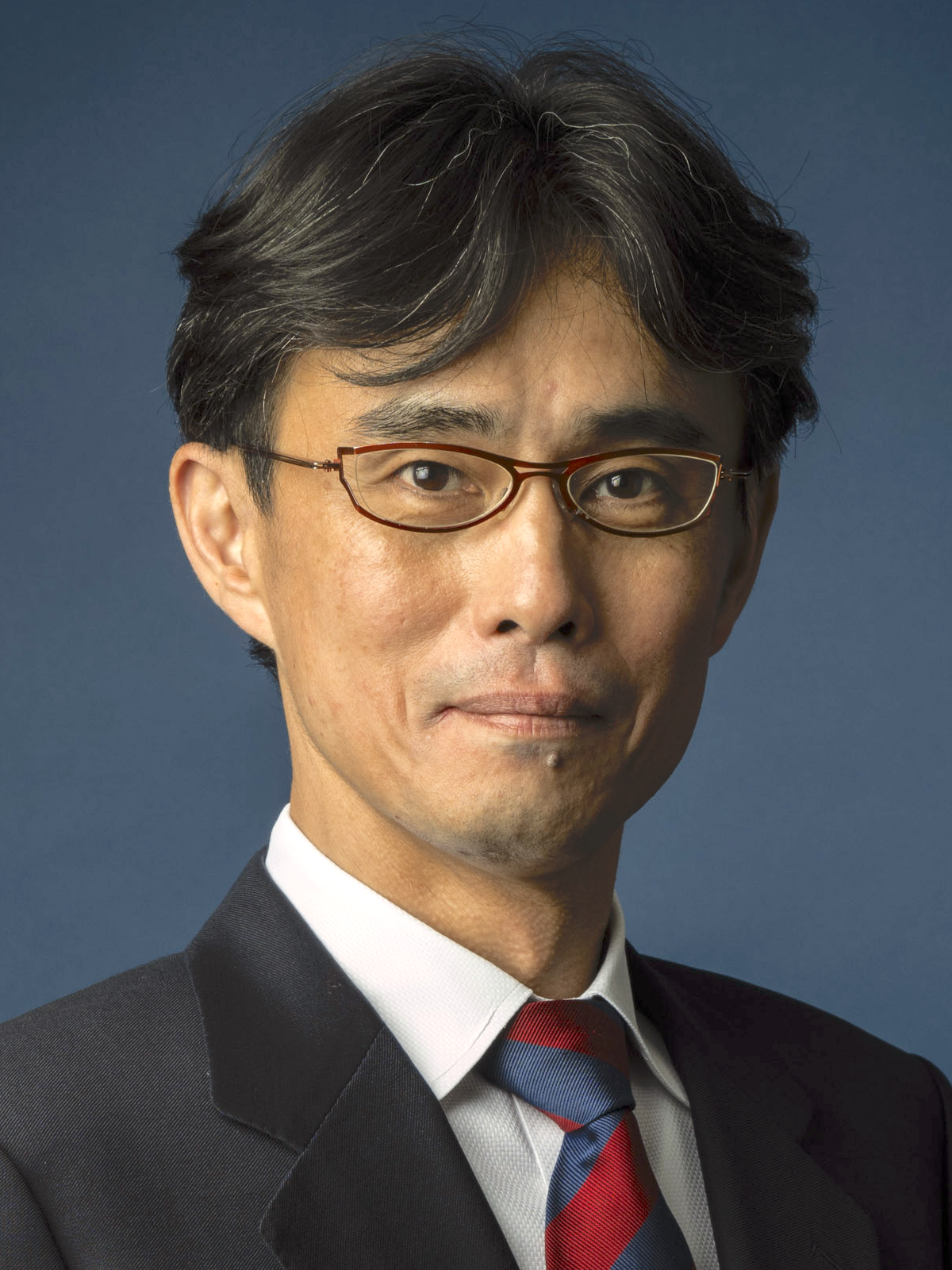
Jin Nakazawa

Jin Nakazawa

🎓 Academic Keynote
Professor, Keio University

Ubiquitous computing and IoT; edge‑AI architectures and city‑scale sensing infrastructures. 300+ publications.

🇯🇵 Japan

Arpan Kar

Arpan Kar

🎓 Academic Keynote
Professor, IIT Delhi

Design, adoption, and real‑world impact of IoT/ICT systems. 250+ publications, h‑index 74.

🇮🇳 India

Ramadhani S. Sinde

Ramadhani S. Sinde

🎓 Academic Keynote
Senior Lecturer, NM‑AIST

AI‑enabled embedded IoT for biodiversity conservation and human–wildlife conflict mitigation in Tanzania.

🇹🇿 Tanzania


Organizing Committee

Our organizing committee spans across two continents and combines academic and industry members.

Prakrit Silal

Prakrit Silal

General Co‑Chair
Assistant Professor, IIM Jammu

IoT‑enabled information systems, digital governance, and ICT4D.

🇮🇳 India
Hitika Tiwari

Hitika Tiwari

General Co‑Chair
Assistant Professor, IIT Madras Zanzibar Campus

Computer vision & signal processing for edge/IoT sensor data. Dual PhD (NYCU Taiwan & IIT Kanpur); former Research Scientist, Rakuten Group.

🇹🇿 Tanzania
Eshika Aggarwal

Eshika Aggarwal

Program Co‑Chair
Assistant Professor, IIM Jammu

AI‑enabled decision support and enterprise AI adoption; nearly a decade of industry experience at IBM, TCS, and NIIT Technologies.

🇮🇳 India
Teruaki Yokoyama

Teruaki Yokoyama

Local Arrangements & Publicity Chair
Kobe Institute of Computing & NICT

Internet architecture, IoT network systems, and cybersecurity. Manages SecHack365.

🇯🇵 Japan
Rashi

Rashi Niyas P.

Publications & Demo Track Chair
AI Engineer, Systech

Computer vision and applied AI - health.

🇮🇳 India

Registration, Travel & Sponsors

🎟️ Registration

Open to all registered IEEE AIoT 2026 participants. Complimentary registrations are available for underrepresented speakers, student authors, and practitioners presenting field deployments, subject to available funding.

✈️ Travel & Financial Aid

Details to be published alongside the Congress's Inclusion & Accessibility resources. Priority will be given to students and early‑career researchers from underrepresented institutions.

🤝 Call for Sponsors

We welcome organizations to support travel grants, awards, and workshop activities. Sponsors are recognized on the website, during the event, and in all workshop materials. Contact the organizers to discuss.